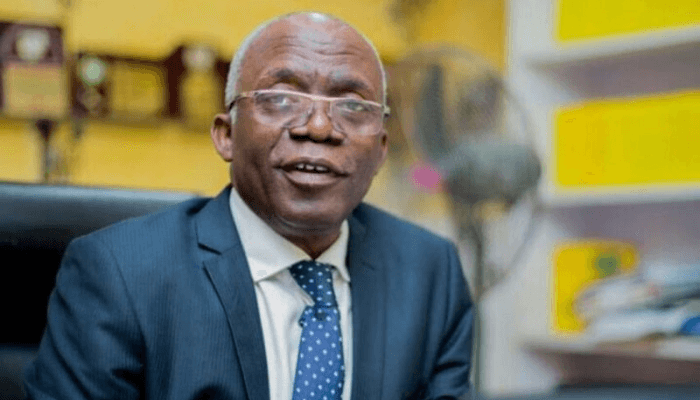
AVEVA’s Vice President in charge of African markets, Khaled Salah, who was in Nigeria recently, spoke on the resilience and potential of the African markets to scale businesses, using the right data, among others. Emma Okonji presents the excerpts
As an industrial software company, how will AVEVA use existing market data to support business growth in Nigeria and Africa?
AVEVA is an industrial software company and we help our customers to utilise their data to bring efficiency and to put data into context to bring utilisation to their operation. So, since January we took the decision at AVEVA to separate the legacy market Middle East and Africa into two markets, Middle East alone and Africa alone.
I took the leadership role on Africa since January and since then, I’m focusing on six main countries in Africa. In the North are Egypt, Morocco, and Algeria. In the South are Nigeria, South Africa and Kenya. The reason why I’m focusing on the six countries is because I see a lot of potential there in terms of talents, innovation, resilience and as well as maturity and we can build on such attributes to achieve what the country wants to achieve.
You had the AVEVA’s Day in Nigeria, where you brought partners and customers together. What is AVEVA’s interest in Nigeria and what has been the milestone so far?
Nigeria is really the heart of digital transformation in Africa for a couple of reasons. The first reason is about the youthful population that is almost 60 per cent. Nigeria has a vibrant youthful population with the right ingredient and the right skills to take the country to a higher level. The second point is the experience in oil and gas. There are major oil and gas companies in Nigeria that we can support to take them to the next level of transformation.
The other point is the government initiative. There are lots of initiatives that are people focused. Nigerian government is investing a lot on digital transformation of the country. We are interested in investing in people and we are investing in sales leaders in the country to get them closer to the customers. Africa should be Africa for Africa. This is what I mentioned on the stage during the AVEVA Day in Nigeria. What does it mean? It means that we need to prioritise what the continent needs. We cannot just bring a global standard and push it to Africa, because it will not work. We need to tailor our technology and tailor our go-to-market and tailor our model to Africa. My strategy is to utilise the local continent, the students, the talent, the partners, and then support them to innovate in our technology to support the customers. This is really why I see Nigeria as a great potential for AVEVA business.
Nigeria is positioned as a dynamic market in the EMEA region. What specific investments and talent development did AVEVA’s 2026 business roadmap bring to the Nigerian market?
Our first line of investment is in our partners. We have technology partners in Nigeria that resell AVEVA technology to the customers. They are considered as our extended AVEVA team here in Nigeria. We invest in them. We give them the best training. We give them the best technology. We engage with them with our learning outcomes.
We also engage with some universities in Nigeria, and we offer them technology training. We bring talents from engineering school just about to graduate. Then we give them education. One of my initiatives that I will start to work on is to engage strongly with the universities of Nigeria.
I want to establish a strong partnership with the university system, where we will give them our solution to build on in their laboratories. So the students at their final stage before graduation, they can have hands-on experience with our technology.
With such partnership, they can bridge the theoretical academic education with the practical and have industry experience. The reality is that studies and experience in the university are different from industry experience and that makes the partnership an ideal one.
Nigerian businesses are under pressure from FX liquidity challenges and high capital cost. How will AVEVA’s Connect solution reduce cost of doing business in Nigeria?
We support customers to utilise the power of their data. Every customer has the data, but they don’t utilise the power of the data. So when I was speaking with a customer two days ago in Abuja, I realised that the main task was how to increase production or decrease the utility bills. And to achieve that, you need to bring the data of the organisation, put data into context so you can have enterprise visibility to see what’s happening. So I was discussing with company executives in Abuja few days ago. They are executives, but they don’t see what’s happening in real time about their business. They need to make a call and they need to ask for a report, and also ask for a presentation before they can get vital information about the business they control.. They don’t have such visibility in real time. But once we bring data into context, into visibility, the executive can take decisions, the right decisions at the right time.
To address the situation, we will take all the operation data and we put them in a unified platform. And then we take all the engineering data and we put them in a platform. Once we have the operation data and the engineering data together, we call that the digital twin, which is a digital representation for our physical assets. Once you have the digital representation and full visibility of the enterprise, you can take better and fast actions.
From your interactions with Nigerian businesses, what are the identified gaps and pain-points in growing their businesses and how can AVEVA help to bridge the gap?
Working with customers, we have three stages and steps in addressing identified challenges and pain-points of businesses. The first stage is what we call gap analysis. We assess what they have and compare it with our experience because we have done this with other companies. If I take oil and gas sector as an example, we have worked with 90 per cent of the global oil and gas companies. So we have experience in all the ecosystem of oil and gas, in upstream and refinery, including ministry. So when we come to work with an upstream company in Nigeria, we already know the pain-points and how to address them.
The first thin that we do is about assessment to understand the digital maturity standpoint and what the gaps are. And then we can advise a customer with some solution to bridge the gap. The second stage is implementation. We implement the software. We make it up and running, while the third stage is adoption.
We don’t just give the customer the software and return back to our country. We support the customer to adopt the software. You cannot just implement the software and expect the company to run with it. There is need to support the customer in the area of adoption.
Nigeria has governance structure that could be different from what you have in your country. Where the governance system runs contrary to your own operational systems, what do you do?
AVEVA strongly believes in the policy of ‘local for local’. I think one of the successful models around us is China and India. Why China and India have been successful is because they believe in the policy of ‘China for China’ and ‘India for India’. And we need to do same in Africa by adopting the policy of ‘Africa for Africa’. So if the governance structure differs, I will go with the local model, with the local governance structure, relying on the Nigerian partners to tell us the best way to navigate through that.
AVEVA recently signed some partnership deals with global tech giants. How will the global partnership benefit Nigerian companies that are using your solutions?
Majority of our global partners also operate in Nigeria as well, and this makes our customers in Nigeria to have access to our global partners. It means we can easily recommend our Nigerian customers to our global partners.
We have partnership with AWS, IFS, Azure, and Databricks, and we can recommend our Nigerian customers to them since they also operate in Nigeria, and that is a business advantage for our Nigerian customers.
However, if there is a specific local partner in Nigeria, which will really support the ecosystem, of course we’ll be happy to work and innovate with those partners.
You spoke about your Connect platform, which aims to bridge operational and information technology. Why is this integration necessary for business owners?
Connect is our virtual experience solution. We provide the virtual experience to the customer. We enable them to have access to everything they need to design, build, operate, and optimise better. And we call this, Industrial Intelligence-as-a-service. This means that through Connect, the cloud platform, we can bring data from on-premise to the cloud. And we can support the customer to share the data with another partner, or to build some analytics on the data in the cloud. So we provide data sharing. And the data sharing is very essential in large organisations, because if I don’t have data sharing, it means that people need to download an Excel file and send it, and in this case, they don’t see that.
As a global company, how are you working with local operators in Nigeria, to develop local content, which they can use to implement your solutions here in Nigeria?
So this is really the next step for us. We started already with our partners. So we started developing our content in the local content. So our partners are now using all our global content and we support them to translate that into local content. And again, supporting the university will be part of that, because in our experience, it takes a year for a person understand and organisation’s operations to be able to work in a software organisation. We are engaging with some universities to agree on some signature. I have done this in other countries already.
So basically, I will start with some universities and if it goes well, I try to take it to the Minister of Education for implementation across universities of the country as well. It however takes a bit of time because we need to validate the curriculum.
Looking at the challenges in Nigerian infrastructure and skills gap, what do you think is limiting manufacturers and other companies from enjoying the benefits of AI and digital twin?
I think the challenge for Nigeria is scalability. The technology exists. We have the technology right now. We don’t need to wait any longer for it. I think the next stage of evolution that Nigeria will go through is going from pilot to scalability. If I work with a customer on an efficiency of a pump, we do a pilot on a pump, and he’s happy with the pilot, then the next thing is to go scale across all the pumps where the customer will unlock real value.
How will you address the issue of interoperability when you layer AVEVA’s solution on exiting solutions, and still avoid downtime in organisation’s operations?
Earlier in my conversation, I spoke about the problem that we have, which is in energy sector. There are two ways to have energy, supply and demand. More supply means more grid, more nuclear plant and so on.
And we said that new grid or nuclear plant or gas turbine, will take a lot of time. So the only ideal way is to go to the existing assets that you mentioned.
We don’t have the luxury to build a new grid. We don’t have the luxury to build a new nuclear plant. It takes a lot of time. So the only way is to optimise the demand. We need to go to old factories. We need to go to old machines. And because the old factories and old machines are not efficient, they use a lot of energy. It’s like your fridge at home, which is all the time open. It’s just using energy.
So to answer your question, actually going to those machines and going to those old assets is the right way to go.