I do not know whether to say the eagle has landed for the Digital Switch-Over (DSO) or simply to say that a convoluted process has simply been resolved in the manner of deus ex machina. But whichever will apply, the fact that the DSO was launched on Wednesday June 17, 2026, under the Big Picture Initiative, is reflective of lingering concerns that need to be resolved before the process can actually gain traction. As it is, there is a small measure of progress recorded which does not leave any party in the value chain in any place of comfort but rather a call for higher and more altruistic commitment that can enrich the process to the level of acceptance. A palpable feeling of relief was understandably pronounced on the faces of key actors in the management of the process. At least, a good message for the President of a nation who is looking for good news no matter how very small.
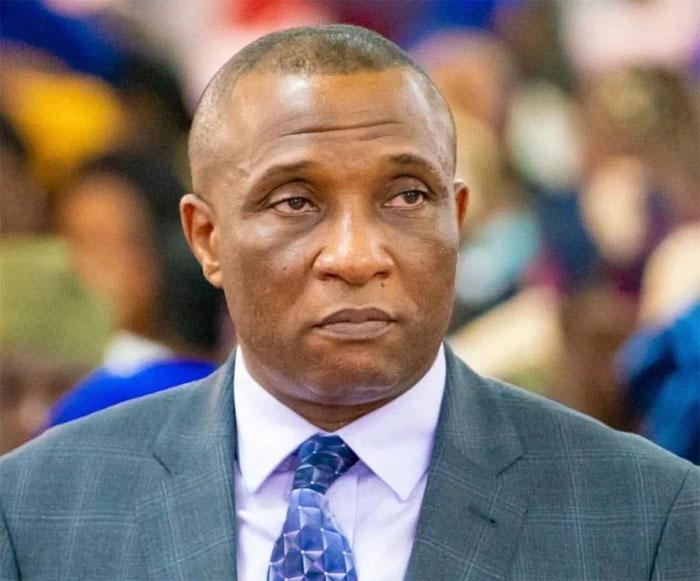
A happy Minister of Information and National Orientation, Mohammed Idris, enthused that the DSO programme is not merely a technological upgrade but a strategic investment in Nigeria’s future which will expand access to quality broadcasting, strengthen content production, create jobs, stimulate local manufacturing, increase advertising opportunities and unlock new revenue streams for broadcasters and contentment creators. Idris credited President Bola Ahmed Tinubu for the vision to drive digital transformation, innovation and development of critical national infrastructure, while informing that the project is the result of years of planning, investment, stakeholder engagement and perseverance. But it was the Director General of the National Broadcasting Commission (NBC), Charles Ebuebu, that waxed lyrically poetic in his welcome address. “There are moments in the life of a nation that transcend policy. Moments that redefine possibilities. Moments that remind us that the future is not something we inherit, but something we deliberately build. “Today is one of those moments. Today, we are not merely launching a digital broadcasting platform. We are launching a new national communications infrastructure. “We are opening a new chapter in Nigeria’s digital transformation. And above all, we are unveiling The Big Picture,” he rhapsodised.
He painted the vision of a country where every citizen, irrespective of geography, income or social status, will enjoy equal access to high quality television, trusted information, educational opportunities, cultural expression and limitless digital possibilities. “Today, history is not waiting for us. History is being written by us,” Ebuebu intoned. There is a place for enthusiasm. There is a place for optimism. And there is also a place for esoteric agglomeration of hope which is not sustained by reality. That is when hope becomes vapour which easily evaporates or like castles in the air that cannot endure any harsh condition. There was another meeting a day earlier, June 16, 2026. It was a stakeholders meeting called by the NBC under the prompting of the Minister to save the event of June 17 which was heading towards chaos and jeopardy. Key stakeholders were overlooked in the preparation for the launch, just like leaving key players out of a football game while expecting good results. Especially under the new dispensation of DSO, everybody – broadcasters, set-top-box manufacturers and content makers, among others, is important in the value chain. This informed the fixed position we had taken in this column that the regulator must call stakeholder meetings that bring everybody to the table to reason together.
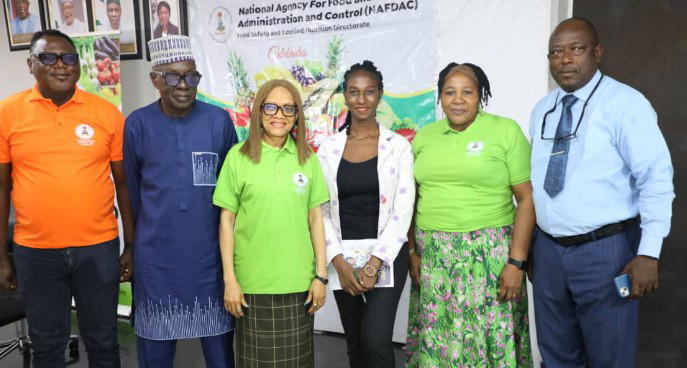
The meeting presided over by the Minister had in attendance 128 participants from the broadcast ecosystem, comprising regulators, broadcasters, signal distributors, set-top-box manufacturers, content producers, satellite operator, and industry associations. Mohammed Idris, who called the meeting a family discussion aimed at finding practical solutions to ensure the success of the DSO project, led the government team which included Ebuebu, DG, NBC; Dr BRM Ukire, Permanent Secretary, Ministry of Information; Abdulhameed Dambos, DG, NTA; Dr Olalekan Fadolapo, DG, ARCON; and Nkechi Everton-Idehen, MD/CEO, NIGCOMSAT Ltd. Tony Akiotu, Chairman, Broadcasting organisation of Nigeria (BON), led the broadcast industry team – public and private, and also represented so many other interests at the meeting.
It was a stakeholder meeting, but it was more of a crisis management meeting where the Minister literally bent-over-backwards to promise that the government would do anything to ensure that the DSO project succeeds while doing everything to accommodate aggregated interests of the stakeholder community. In spite of variegated interests and postions canvassed at the meeting, participants maintained a common position that DSO remains necessary and desirable for Nigeria, which transition should prioritise national interest and industry sustainability. The 11-point resolution reached at the meeting is indicative of the extensive deliberations and the concomitant horse-trading to accommodate the sensibilities and concerns of the various groups to ensure nobody is counting losses in the name of patriotism, while some others embedded in a seeming complicated process, are smiling to the banks.
Here are a few of the resolutions reached: Stakeholders reaffirmed their collective commitment to the successful implementation of the Digital Switch Over programme in Nigeria; The meeting agreed that Digital Terrestrial Television (DTT) remains an integral part of the DSO framework and should not be discontinued; and Stakeholders agreed on the importance of adopting a hybrid digital broadcasting model that leverages DTT, Direct-to-Home (DTH) satellite services, and digital application-based delivery platforms. Since fear had been raised that NIGCOMSAT has no capacity to accommodate the fortunes and expectations of the nation’s broadcast industry as it doesn’t even seem to have a redudancy, the government affirmed the reliability of the Nigerian satellite operator, adding that it has made alternative backup arrangements with some other satellite operators. Stakeholders at the meeting also agreed that the National Broadcasting Commission should remain committed to protecting investments already made by licensed set-top box manufacturers and other stakeholders within the DSO ecosystem. The stakeholders also identified some other measures that have to be taken immediately by the NBC in order to bring everybody on the accelerator conveying the DSO implementation.
For instance, the NBC had faced harsh criticisms that it worked with a tiny clique to foist the Big Picture on the broadcast industry in particular and the nation in general. Perhaps, as a subtle response to such fears, it was agreed that “the Federal government of Nigeria through the Federal Ministry of Information and National Orientation should reconstitute the DigiTeam and stakeholder platform to provide structured mechanism for consultation, collaboration, and industry participation. It was also suggested that the NBC should continue engagements with set-top box manufacturers and other industry stakeholders to address concerns regarding existing investments and future participation in the DSO ecosystem. But speaking on a TV channel the following morning, Akiotu who appreciated the Minister’s intervention and the eventual outcome of the meeting, however advised his members not to sign any agreement with the regulator until BON lawyers have taken a look at all the documentation, including the contract, to ensure that everybody in the value chain is fairly treated. That would mean a sign of trouble? I don’t think so. I think this is brilliant housekeeping to ensure that investors and broadcast managers are not hurt unduly.
The DSO was met to be a simple process. But in our clime the journey has been tortuous. Morocco did their implementation taking the satellite option. America implemented a long a time ago, even giving coupons to households to enable them connect to digital TV. Nigeria wasn’t that fortunate. Quite a number of organisations, including service providers, were invited to join the implementation process, and the broil was ruined by too many hands.
The new version launched recently looks smart and simple but those are not qualities of hybrid which could mean a breed between two or a combination of two and that comes with complications which are availabe here. Let’s take the definition from the NBC itself. “The first and most important clarification is this: Free TV is not an internet-only streaming platform masquerading as digital broadcasting. It is a hybrid national broadcasting ecosystem built around multiple distribution layers: Direct-to-Home (DTH) satellite delivery, Digital Terrestrial Television (DTT), and Internet Protocol (IP) distribution through the FreeTV application. In other words, the FreeTV App is not the platform. It is simply one of the platform’s distribution nodes.”
Just a cursory look at the above tells me there are so many huddles still to be crossed. But first, let me congratulate the NBC DG for audaciously canvassing and pushing through his variant of DSO implementation. That is the easier part of it. I am quick to add that much work remains to be done; a lot of education and awareness campaign. For instance, why should the NBC be trusted as a regulator and a player in the process and is government sneaking into broadcasting subterraneously? How will the cost of receive equipment be managed. I am also fascinated that BON is not looking at the process emotionally but with a critical professional stance which I think, at the end of the day, will benefit the process.
Here is my final unsolicited suggestion. The movement from analogue to digital TV was intended to free up some broadcast frequencies for telecommunications services. Telecom operators can easily fund the acquisition of spectrum. Since the country will always have a cocktail of elevated needs demanding urgent funding, I want to suggest that some spectrums, say four, be put on sale mainly for the purpose of funding DSO. The money realised may be used to address stranded investors in the value chain, subsidise the acquisition of receive equipment , and plainly prune out strands of complaints encumbering the entire process. The new DigiTeam must get to work immediately to address stakeholders’ worries before current interests return to point zero.