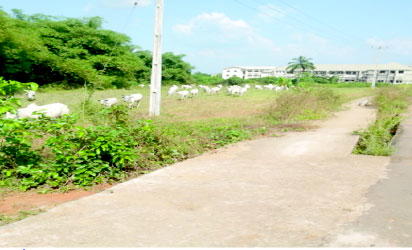
The renewed push by the Federal Government to end open grazing and activate the so-called 470 gazetted grazing reserves is a deeply troubling return to a policy that has already generated fierce controversy, failed to win public confidence, and proved impossible to implement smoothly in the past. Nigerians were told for years that open grazing would be phased out through orderly transition, yet the idea has repeatedly resurfaced in different guises, each time provoking the same anxieties about land, security, and fairness. It is therefore disappointing that a government which promised renewed hope and inclusion now appears willing to breathe life into a discredited scheme that could heighten tension nationwide.
The central problem is not whether livestock production should be modernised. It should. The problem is the repeated assumption that the burden of adjustment must fall on communities that did not invite it, did not consent to it, and may already have planned their land for other lawful uses. If the Federal Government is serious about these so-called legally gazetted grazing reserves, then it must publish their locations, ownership status, size, current use, and legal basis immediately. State governments, communities, and private landowners have a right to know whether any part of their land has truly been set aside for this purpose, and whether there was lawful consultation and consent before such designation was made.
This is not a minor administrative detail. It goes to the heart of peace, security and property rights. It is entirely possible that some of the lands now being described as reserves have long been earmarked or deployed for housing, farming, schools, public infrastructure, or other development by state authorities and local owners. Any attempt to “reclaim” such land in the name of grazing will place landowners and pastoral interests on a collision course, worsening conflicts already tearing through many parts of the country. Livestock production is a business like any other, and businesses must operate within the law. Those in the sector should acquire land from willing sellers or lessees, establish ranches, and keep their animals off other people’s forests, farms, and settlements.
Nomadism is not a modern economic strategy; it is a recipe for friction in a densely populated country struggling with insecurity. The reality is that open grazing has also become a cover under which criminals exploit weak enforcement to move, hide, kidnap, terrorise and violently Islamise vulnerable communities. The government should therefore abandon this idea forthwith. It should not impose a policy that many citizens view as one-sided, unfair, and dangerous. Livestock farming is not an ethnic occupation, and public policy must never be designed to gratify any single group at the expense of national cohesion. If the country is to remain stable, the path is ranching by consent, lawfully acquired land and respect for the patrimonial rights of all indigenous communities.