…ADC faults government, demands urgent action
…Lagos will continue to build flood-resilient infrastructure — Commissioner
….Encroached drainage, indiscriminate waste disposal worsen flooding, says Wahab
By Olasunkanmi Akoni
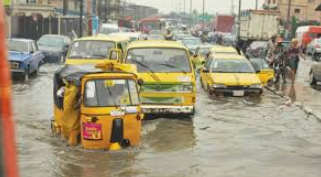
LAGOS — Torrential rainfall that lasted for more than 12 hours on Tuesday left several parts of Lagos flooded, displacing residents, shutting down businesses and crippling vehicular and commercial activities across the state.
The heavy downpour, which began on Sunday and intensified on Tuesday, stranded motorists and commuters in several locations, while many residents battled to evacuate floodwater from their homes.
The severity of the flooding also forced many parents and guardians to keep their children at home over safety concerns.
Areas worst affected included the Lagos-Oshodi Expressway, Abeokuta Expressway around Oshodi Bus Stop, Lekki-Epe Expressway and adjoining communities, Victoria Island, Agege, Ikeja, Oworonshoki, Gbagada, Funsho Williams Avenue, Iwaya in Yaba, parts of Lagos Mainland and other low-lying coastal communities.
Videos circulating on social media showed residents and motorists trapped in floodwaters, with many appealing to the Lagos State Government for urgent intervention. Others criticised the government over what they described as the recurring flooding crisis in the state.
As of about 11 a.m., floodwaters had completely submerged the bridge linking Ojota and Maryland along Ikorodu Road, leaving several vehicles stranded.
A Vanguard visit to parts of Lekki, Oshodi and adjoining areas showed flooded roads, submerged buildings and vehicles struggling through rising stormwater.
Many business premises and shops remained closed, while commuters crowded available shelters at bus stops to escape the rain.
Although the rain subsided around 2 p.m., it left behind severe traffic congestion across major roads, while many residents remained trapped in their homes.
ADC faults government, seeks urgent intervention
Reacting to the development, the African Democratic Congress (ADC) condemned the flooding that has affected Oshodi and surrounding communities for three consecutive days.
The party’s candidate for Oshodi-Isolo I Federal Constituency in the 2027 general elections, Akintunde Adetunji, sympathised with residents, traders and families whose homes, shops and means of livelihood were destroyed.
“No Nigerian should lose property and peace of mind because of poor drainage, blocked canals and the lack of proactive flood control measures,” he said.
Adetunji urged the Lagos State Government, the Oshodi-Isolo Local Government Council and relevant agencies to provide immediate relief to victims, intensify desilting of drainage channels ahead of the peak of the rainy season and strictly enforce laws against indiscriminate dumping of refuse into drainage systems.
“Oshodi is the gateway to Lagos. It deserves better planning and protection. Our thoughts and prayers are with everyone affected. Lagos must act now, and particularly the Oshodi chairman must act now,” he added.
Lagos assures residents of safety
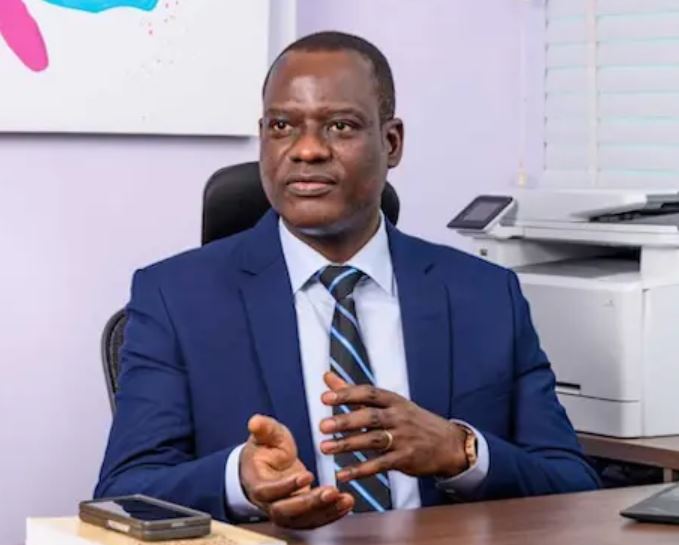
Meanwhile, the Lagos State Commissioner for the Environment and Water Resources, Tokunbo Wahab, said residents would continue to experience flash floods due to climate change and the intensity of rainfall, assuring that the government was expanding resilient infrastructure across the state to mitigate the impact.
Wahab blamed persistent flooding on widespread encroachment on drainage channels and indiscriminate dumping of refuse by residents and some estate developers.
He explained that the flooding recorded around Ikorodu Road was worsened by ongoing construction works.
“What happened in Ikorodu was that the contractor had dammed the downstream section to facilitate construction. He did not anticipate rainfall of this magnitude. Once the rain intensified, the government directed him to reopen the downstream channel to allow stormwater to flow freely,” he said.
The commissioner recalled that the Nigerian Meteorological Agency (NiMet) had predicted above-normal rainfall as early as March, prompting the ministry to begin extensive public awareness campaigns in April.
According to him, residents in flood-prone communities, including Agboyi, Agiliti, Itowolo and Ajegunle, had been advised to temporarily relocate to safer, higher grounds whenever necessary.
He said the state had continued year-round desilting of drainage channels and manholes through the Emergency Flood Abatement Gang (EFAG) across all local government and local council development areas.
Wahab stressed that climate change had made extreme weather events more frequent worldwide.
“Climate change is real. Countries that previously did not experience flooding are now facing similar challenges,” he said.
He added that the government had awarded several drainage projects across the state and mobilised contractors to ensure long-term flood control.
“We expected the rains and put resilience measures in place. We will continue to expand drainage infrastructure statewide. We cannot compromise on quality simply to complete projects quickly,” he said.
The commissioner also lamented increasing encroachment on drainage corridors, citing Agungi in the Lekki axis, where some estate developers allegedly built on drainage channels.
He disclosed that the government had ordered the demolition of structures obstructing drainage channels at Megamond Estate in Lekki to restore the free flow of stormwater.
On flooding in Iwaya, Wahab noted that the community’s low-lying location and proximity to the lagoon made it particularly vulnerable to flash floods.
During an inspection of flood-prone areas in Agungi-Ajiran, Gravitas and Ikota on Sunday, Wahab warned that the government would no longer tolerate encroachment on drainage alignments, floodplains and natural waterways.
“We will remove all illegal structures obstructing drainage channels, regardless of ownership. We are giving the necessary approvals to immediately open up blocked channels leading to the lagoon,” he said.
The commissioner also raised concerns over alleged illegal reclamation of wetlands around Graceland Estate and unauthorised encroachment on the Ikota River by private developers.
He explained that wetlands naturally absorb excess water during heavy rainfall and warned that their destruction would worsen flooding.
According to him, the government has directed the developers to halt work pending verification of their approvals, insisting that all reclamation activities must comply with approved setback regulations and environmental impact assessment requirements.
Wahab further warned traditional landowners against permitting developments that violate environmental regulations, stressing that ownership of land does not exempt anyone from complying with planning and environmental laws.