By Vera Anyagafu
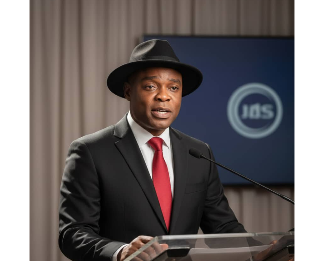
State of the African Diaspora (SOAD) Minister of Trade, Hon. Ebube Ebisike George, carries a resume that reads like three careers in one; diplomat, serial entrepreneur, and aspiring astronaut.
But at the core, he is a Nigerian pushing trade, energy, and human capital projects across continents, and now speaking out
against South African attacks on Nigerians and other African nationals.
A civil engineer by training, Ebisike has built his career at the intersection of science, diplomacy, and business. He serves as a mandate holder and consultant to several international organisations, including the $100B Africa Energy Fund (AEF), where he advises on investments aimed at bridging Africa’s oil and gas, finance, and infrastructure gaps. Now, as SOAD’s Minister of Trade, he is channeling that experience into shaping policy for Africa’s sixth region and opening new economic pathways for the diaspora.
In this interview with Vanguard Consular Hub, Ebisike shares his views on how SOAD is bringing in diaspora and other investment partners to drive youth job creation, technology transfer, energy and food sovereignty, and long-term industrial competitiveness for Africa, while also speaking out against South African attacks on Nigerians, Cameronians incursions, and working to protect African youth from being recruited as mercenaries in the Russia-Ukraine war, among others.
Excerpt ;
How can South Africa and other African countries replace xenophobic attacks with AI-driven policing, uphold a Pan-Africa first mindset, and advance borderless trade and industrialisation to protect African interests and drive continental growth?
The Xenophobic attacks in South Africa targeting Nigerians and other nationals run counter to Pan-Africanism and the vision of a borderless Africa built for free trade, innovation, and commerce. In the 21st century, Africans must adopt a ‘Pan-Africa first’ mindset instead of directing frustration at fellow Africans, especially immigrants. Crime and immigration violations should be addressed through policing and government agencies to protect lives and property.
From the perspective of SOAD’s Ministry of Trade, the Africa Energy Fund (AEF), and partners like GGC UK, deploying cutting-edge ‘iLamp’ AI technology with OpenAI can enable real-time, efficient policing that safeguards citizens and state assets wherever it is deployed.
Ultimately, Africa’s rise depends on protecting African interests everywhere and resolving disputes through dialogue and policy, not internal conflict. By preserving human capital and wealth on the continent, investing in primary industrial manufacturing, and supporting entrepreneurship, job creation, wealth redistribution, and indigenous industry finance, Africa can drive technological leadership and strengthen its civilisational competitiveness. In a nutshell Africa will rise by protecting African interests at all times and in all spaces not we warring against ourselves over matters that can be resolved very amicably through dialogue and policies that ensure we preserve our human capital and resources earnings on the continent.
How can Africa unlock the African Continent Free Trade Area (AfCFTA) promise for inter-African trade and drive massive, self-sustained growth without foreign interference or deindustrialisation, if xenophobia remains and we do not adopt a continent-wide policy of open borders?
Xenophobia has no place in Africa. For real progress, Africans need to find common ground and work together sustainably, the way EU member states do.
A borderless Africa is the missing engine for the African Continental Free Trade Area, AfCFTA. When goods, people, and capital move freely across the continent’s 54 countries, it triggers wealth redistribution and entrepreneurship as inter-African trade expands markets, grows local startups, and accelerates skills acquisition across sectors. It drives industrialisation, allowing Africa to build high-tech industries at home, from semiconductors and aerospace to defense manufacturing, instead of shipping raw materials abroad for refining. AfCFTA also strengthens economic sovereignty by driving investment into local industries, boosting energy sufficiency and food sovereignty, and reducing reliance on Genetically Modified Organisms (GMOs) and harmful pharmaceutical imports. It means strong quality control and rejecting ‘economic hitman’ deals from Bretton Woods institutions and psychological operations aimed at undermining Africans.
An ‘Africa first’ approach keeps the continent’s resources and spending within African hands and markets for as long as possible, fueling indigenous R&D, tech growth, and a redesigned education system focused on solving African problems. It pushes for stronger African currencies, a unified currency regime, and alternative banking systems to the Society for Worldwide Interbank Financial Telecommunication (SWIFT) and other Western-controlled networks. AfCFTA also requires blocking unnecessary foreign interventions, rejecting proxy wars, and ending covert tactics of deindustrialisation. In short, AfCFTA only works if Africa thinks and acts as one bloc.
As SOAD’s Minister of Trade and a Nigerian entrepreneur, what trade opportunities are you prioritising to connect the diaspora with Africa’s markets, and how can Nigerian businesses benefit?
As SOAD Minister of Trade, I have been partnering with international and local organisations across energy, finance, infrastructure, tech, mining, aviation, and manufacturing. Our partners include Africa Energy Fund, Nestar Energies, Conrad Global USA, Global Concession Network, Heureka Entertainment, Innovare UK, Future Trends, SustNET, Ndeipi, Discovery Finance, and GI International South Korea, among others.
The goal is to drive domestic growth and expand these industries across Africa by bringing in diaspora and other investment partners. We are focused on job creation for youth, technology transfer, energy and food sovereignty, and building a long-term industrial competitiveness and self-sufficiency for the African continent.
SOAD has taken action on returning antiquities from France to Benin. Could you share how SOAD is using its diplomatic and trade networks to push for more cultural and economic restitution?
SOAD is using every available channel, from diplomacy and lobbying to direct engagement to drive conversations and action on trade, culture, and policy. Through its parliament, SOAD is pushing for Africa and the diaspora to speak with one voice on key issues, whether it’s the restitution of art, sending a Solar Eagles team to compete at the 2027 World Solar Challenge in Australia, or protecting African youth from being recruited as mercenaries in the Russia-Ukraine war.
Across its 20 plus ministries, SOAD is working to make sure Africa does not get left behind in the AI-driven world of today.
How does SOAD translate its structure into real impact for Africans on the continent and in the diaspora?
SOAD runs programs across the economy, sports, infrastructure, including Smart City projects in development, culture and exchange, health, technology, trade, space, and other sectors. These initiatives bring together African experts and promoters with strategic partners from the diaspora.
What role are Africans in the diaspora playing in Nigeria’s development, and what impact will the State of African Diaspora’s Smart City project in South East Nigeria have?
The SOAD Smart City project, along with another AEF development I am involved in South East Nigeria, will drive major infrastructure growth and trigger the mass industrialisation shift the region urgently needs.
Do you think the Tinubu administration is ready to work with SOAD and meaningfully include the diaspora in governance?
I believe the Tinubu administration should be open to working with SOAD, especially since other African governments already do.
Through our European partner Eureka, SOAD has set up the Africa Rating Agency, (ARA). ARA will train new actuaries, econometricians, and rating experts while using innovative models to assess Africa’s economic growth. Unlike the ‘Big Three’, Moody’s, S&P, and Fitch, which control over 90 per cent of global credit ratings, ARA will avoid the Western bias that has long underrated African economies and cost the continent critical FDI. The African Union is also working on its own rating agency.
SOAD’s Ministry of Trade, is willing and ready to partner with the Tinubu government on cutting-edge security solutions amid current challenges, and to drive progress across Nigeria, West Africa, and the continent. The Ministry is also bringing forward innovations like TEXXI and Synthetic Equity for housing, developed by Ugandan-British scientist Eric Masaba, along with other solutions from our network of partner innovators.
How can Nigeria and Cameroon use technology-driven border policing to stop incursions, smuggling, and address Ambazonia and insecurity for a more peaceful Africa?
The incursion of Cameroonian soldiers into Cross River State, border security between Nigeria and Cameroon needs to shift toward a more technology-driven, coordinated approach.
It is important that border policing evolves an optimal technology driven approach on the Nigeria and Cameroon sides. The Ambazonia issue is a very disturbing subject matter in Cameroon wherein certain portion of the citizens feel subjugated on the basis of remnants of the imperialistic division created centuries ago which have metamorphosed into marginalisation cries and which are similar to the Biafra agitations in Nigeria, over ethnic, cultural and cosmological differences, insecurity and broader marginalisation matters of the people of Igbo extraction by the Fulatheidism and it’s collaborators.
On the matter of Cameroonian soldiers incursion into Cross River it has to be handled strategically so as to ensure these porous borders are not used to proliferate Small Arms and Light Weapons (SALW) smuggling. The worsening insecurity in Nigeria is causing Nigerians living in border towns with other countries to seek refuge across the border due to Fulani Militia and terrorist Boko Haram and affiliates attacks using despicable scorch earth tactics, as also kidnappings for ransom, fears of Islamisation, ethnic cleaning and land grabs that enable illegal solid minerals extractions for terrorist profiteership. SOAD has been monitoring this issues across Africa and through its diplomatic channels to share the needed intelligence, information and advisory with the various Governments in Africa and the AU and other regional bodies, detailing how these sensitive security matters can be resolved for a more peaceful, thriving and progressive Africa continent.