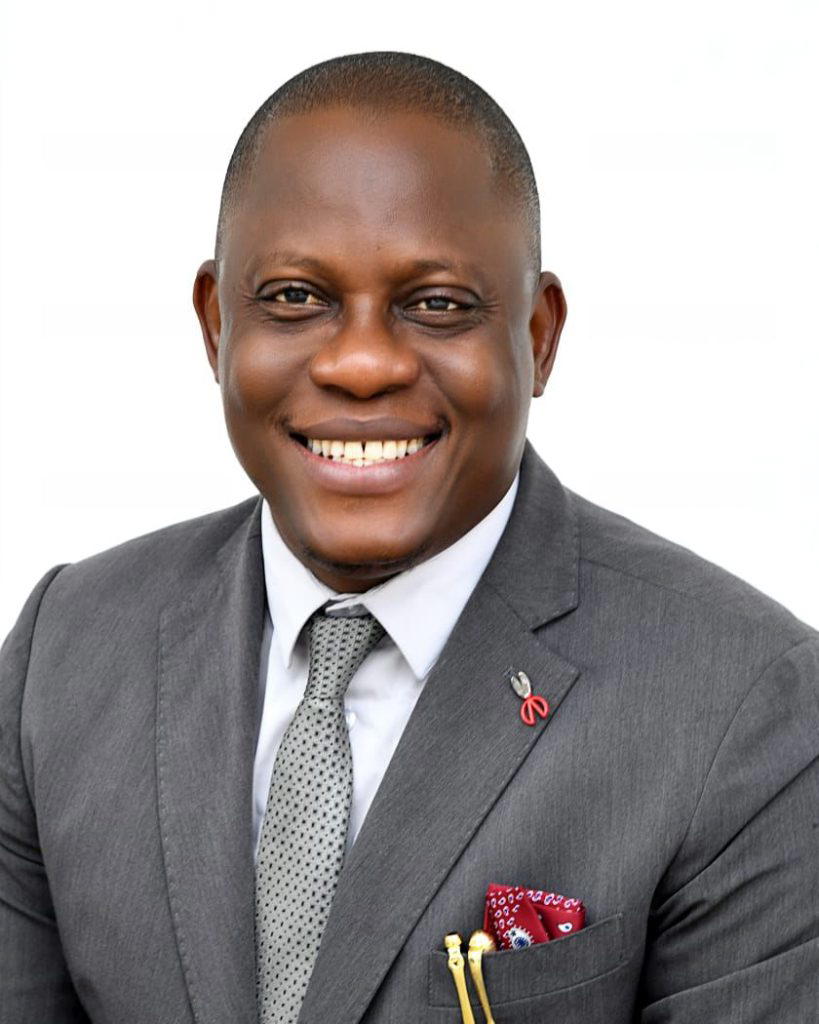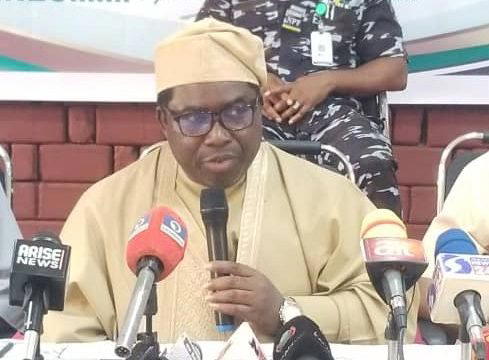
The Minister of Defence General Christopher Musa (Rtd) has democracy cannot flourish where fear dominates daily life of the people.
Musa said no government can secure a nation without the support of it’s people.
He stated this in his presentation at the Platform Africa in commemoration of Nigeria’s Democracy Day on June 12 in Lagos.
General Musa said democracy does not sustain itself automatically. “It requires strong institutions. It requires responsible leadership. It requires active citizenship, and it requires security. No democracy can flourish where fear dominates daily life. No democracy can deliver prosperity where violence disrupts communities. No democracy can fully mature if citizens lose confidence in the ability of the state to protect them.
“When we speak of national defence, the instinct is to focus on boots on the ground, air power or intelligence gathering. However, true and lasting security is anchored on one critical element; the defeat of ignorance and the conquest of hopelessness,” he said.
He noted that security is not about soldiers, weapons but about people.
He said security was about about creating conditions where citizens can live without fear, pursue opportunity, educate their children, build businesses and contribute to national development.
According to the Minister, the defence of democracy is not merely the defence of territory but of freedoms, institutions, economic opportunity and our collective future.
“One lesson I have learned over decades of service is that the true measure of security is not simply the absence of conflict. It is the presence of confidence. Confidence that citizens have in their future, confidence that institutions can function effectively and confidence that opportunity can flourish,”.
He said modern threats are adaptive, evolving, exploiting technology, adding that they also exploit disunity and weak governance spaces.
“They exploit social divisions. In many cases, they are interconnected. The criminal who kidnaps for ransom may be linked to arms traffickers. The extremist group may be supported by transnational networks. The cybercriminal may operate far beyond our borders while affecting citizens within them. This reality means that military force alone is no longer sufficient,”.
General Musa stated that modern defence is no longer determined solely by military assets and personnel.
“Indeed, contemporary security measures requires intelligence, technology, institutional coordination, regional cooperation and above all, national resilience,”.
The Minister emphasised that the Armed Forces continue to serve with courage, professionalism and commitment under difficult conditions.
“Many have paid the ultimate price in defence of our nation. Their sacrifice deserves our gratitude and our continued support,”.
According to the minister, operational gains have been recorded with terrorists leaders neutralised, criminals networks disrupted and troops operational capabilities improved.
He noted that these achievements are real and reflect the dedication of our security personnel.
“ Yet it is equally true that many Nigerians still experience insecurity in their daily lives. A farmer unable to access farmland. A traveller concerned about a highway journey. A parent worried about the safety of a child. These realities matter.
“Security is not measured only by operational statistics. It is ultimately measured by the confidence citizens feel in their homes, communities, and places of work,” he stressed.
He said the future of security will be shaped as much by technology as by traditional military power.
“Artificial intelligence is transforming decision-making. Drones are changing surveillance and operational effectiveness. Cyber capabilities are becoming central to national security. Data analytics are improving intelligence gathering. Information operations increasingly influence public perception and national cohesion. The nations that adapt fastest will possess significant advantages,”.
According to the Minister, Nigeria is facing an increasingly complex security environment requiring innovative approaches that complement conventional defence and security capabilities.
“We must invest in indigenous innovation, strengthen defence research and development as well as harness the talents of our universities, startups, engineers, scientists and innovators.
“The future soldier will increasingly be supported by technology, data and advanced systems but technology alone will not secure a nation. Even the most advanced systems cannot replace trust, unity and national purpose. Ultimately, security succeeds when citizens and institutions work together,” he said.
He noted that lessons from previous military campaigns show that security ultimately rests on people.
“No government can secure a nation alone. No military can secure a nation alone. No security agency can secure a nation alone. National security is a shared responsibility. Breakdown of family values and the lust to make money at all cost has affected the unity and wellbeing of the country,”.
He reiterated that the government has a role, the Armed Forces have a role, th traditional institutions have a role, religious leaders have a role, the media has a role and the private sector has a role and every citizen has a role.
“National unity remains one of our greatest strategic assets. Those who seek to destabilize our nation often seek first to divide it. We must reject those divisions. We must reject extremism. We must reject misinformation. We must reject narratives that weaken our collective resolve.
“Social media has provided the avenue to spread falsehood, recruit criminals, and distort the truth. Most citizens get distracted through social media posts, which is harmful to the cohesive and wellbeing of any nation,”.
To the youths, he said the generation that fought for June 12 secured democracy.
“The responsibility of our generation is to secure it, strengthen it and pass it on stronger than we received it.
As we celebrate democracy today, let us recommit ourselves to peace, unity, responsible citizenship and national progress. Because democracy is more than a political system. Democracy is a promise. A promise of opportunity, participation and hope. That promise is worth defending, protecting and passing on to future generations stronger than we received it,” he said