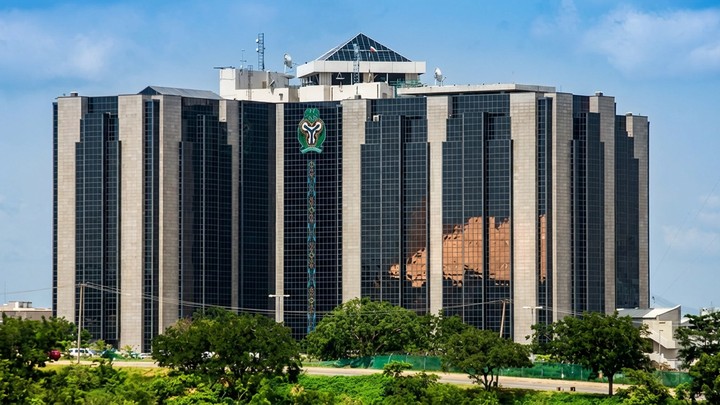
As businesses continue to strive towards finding funding, a total of N14.4 trillion was staked on Central Bank of Nigeria (CBN) liquidity mopping instruments with banks depositing N86.3 trillion in the apex bank in the month of May.
Data from the CBN Economic Report for May showed that financial institutions as well as institutional investors had pulled in a total subscription of N14.4 trillion in May for the Open Market Operations (OMO) auctions of the apex bank.
The CBN regularly conducts OMO auctions to manage excess liquidity in the financial system and in May, it offered N3.6 trillion which attracted N14.4 trillion of which it eventually allotted N12.54 trillion.
This was more than the N10.6 trillion that chased after N3 trillion OMO bills in April of which N9.51 trillion was allotted. According to the CBN, the “higher-than-expected subscription reflected liquidity surfeit and attractive returns.” Stop rates ranged between 19.97 and 21.90 per cent, compared with 19.85 and 21.90 per cent, in the preceding period.
Activity at the standing facilities window reflected the liquidity conditions in the review period as banks deposits with the CBN far outweighed their lending from the window. Data showed that for the month of May, the total utilisation of the Standing Lending Facility (SLF) slowed to N0.02 trillion, from N0.05 trillion in April, with a lower daily average of N0.02 trillion, indicating limited demand for overnight liquidity support by deposit money banks.
Placements at the Standing Deposit Facility (SDF) window stood at N86.30 trillion a lower position compared to N91.55 trillion that was placed in April, despite average daily placement increasing marginally to N4.79 trillion from N4.56 trillion.
The decline in SDF placements, despite higher liquidity, reflected liquidity absorption through open market operations, as total OMO allotments rose by 31.86 per cent, relative to the level in April 2026.
Average banking system liquidity rose in May buoyed by maturing CBN bills, bond coupon payments and fiscal injections. The average net liquidity in the banking system stood at N5.53 trillion, a 17.16 per cent increase from N4.72 trillion in the preceding period, driven largely by inflows from maturing CBN bills, bond coupons and disbursements by the Federation Account Allocation Committee (FAAC). Liquidity conditions were further shaped by CRR maintenance and FX-related activities, supporting stability in short term interest rates.