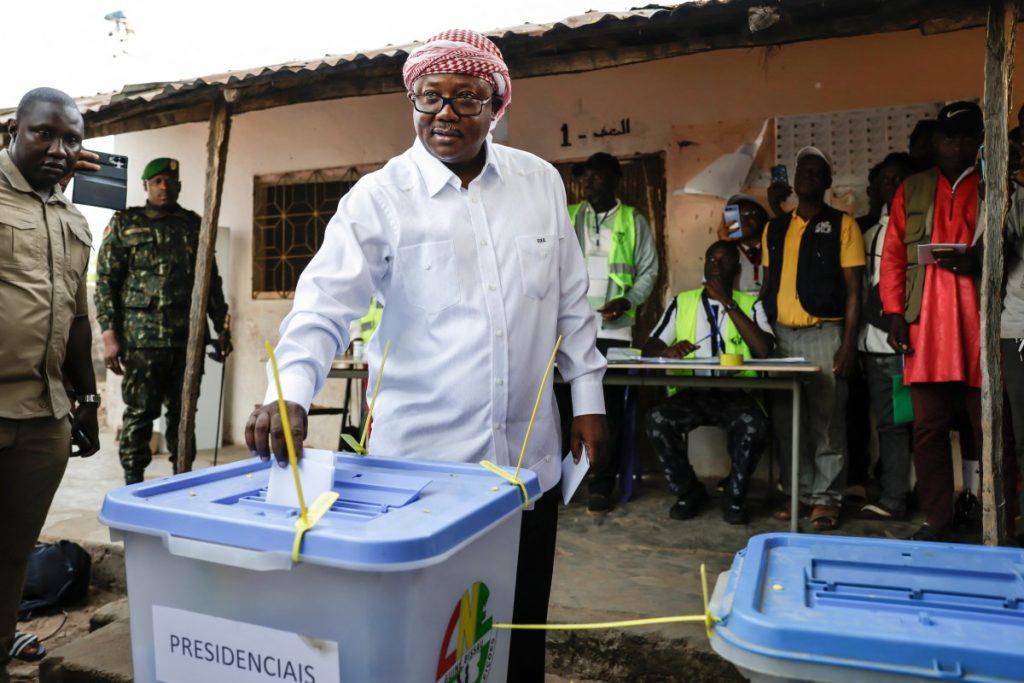
Guinea-Bissau’s exiled former president Umaro Sissoco Embalo, who was ousted in a November coup, told AFP on Monday he will return and run for president in an election due on December 6.
The army seized power in the perennially unstable and poor west African nation just days after a presidential vote, overthrowing Embalo and suspending the electoral process.
The junta established under General Horta N’Tam, a close associate of Embalo, has set December 6 as the date for presidential and legislative elections meant to restore civilian rule.
Promising to return to the country but without specifying when, Embalo told AFP he “will be a candidate in the presidential election”.
Many observers have suspected Embalo of orchestrating the November 26 coup to halt an election process he appeared to be losing.
The coup occurred one day before provisional results were to be announced.
Last week N’Tam told a radio journalist who asked about Embalo that “every Guinean is free to return to their country if they have nothing to be ashamed of. Even those who insult me on social media can return if they wish”.
Activists have posted on social media that they are planning for his return on Sunday.
“Legally, nothing stands in the way of Umaro Sissoco Embalo’s return to Guinea-Bissau. He was ousted from power by a coup d’etat”, political analyst Malam Cisse told AFP, pointing out that he did not “sign any document renouncing power”.
According to history professor Bassirou Sadio, “once the legal conditions are met, everyone should be able to participate in the political contest while respecting established rules.”
N’Tam who also serves as transitional president, is barred from running for president in the election under the country’s transitional charter.
The military justified its coup by stating it was ensuring national order following what it said was the discovery of a plot to destabilise the country involving drug lords.
– Constitutional change –
Voters in Guinea-Bissau approved an August referendum on a constitutional change that gives the president more powers.
The junta said the change will stabilise institutions before the elections in December.
But the political climate is tense in the coup-prone nation and the opposition urged voters to boycott the process.
Guinea-Bissau is the latest example of an African nation’s leaders seeking to amend or overhaul its constitution to extend term limits, remove age restrictions or expand executive powers, following in the footsteps of Zimbabwe, Guinea, Togo, Uganda and Chad.
The coastal nation has seen five coups and several attempted overthrows since its independence from Portugal in 1974.
The nation’s crippling poverty and political chaos have also made it a fertile ground for corruption and drug smuggling.
AFP